
The end of the year is always a moment to pause, look at what has been accomplished, and honestly ask ourselves: are we moving in the right direction?
The year 2025 shows that Latvia’s economy is gradually returning to growth. In the third quarter of this year, Latvia’s gross domestic product increased by 2.5%, reaching 11.2 billion euros. This is a clear signal that the economy is returning to positive momentum, which will certainly be confirmed by the fourth-quarter figures.
The reorganization of the Investment and Development Agency of Latvia has begun to yield results. This year, investments in the national economy reached 3.7 billion euros, and over one billion euros were attracted to new investment projects within a single year. This is a historic achievement, creating new jobs, fostering business development, and opening opportunities for growth. The value added in Latvia’s manufacturing sector increased by 7.3% in the third quarter, a growth rate four times faster than the European average and the best in Europe this year. Construction sector value added grew by 9.0% in the third quarter of 2025. In lending, we have overcome ten years of stagnation.
The volume of credit in the economy has increased by approximately 1.6 billion euros, reflecting the growing activity of banks and the practical impact of the solidarity tax. Lower interest rates and broader refinancing options allow citizens to access more favorable conditions and strengthen economic growth.
This year, support was provided to more than 2,760 small and medium-sized enterprises for the development of their business projects, mainly in Latvia’s regions. New mortgage lending programs and regional support initiatives have been launched, enabling over 3,000 families to purchase homes outside Riga. Simultaneously, low-rent housing construction is ongoing across Latvia, with hundreds of residents already able to move into new rental apartments. Demand for this support program is high nationwide, with rental buildings already opened in Valmiera and Jelgava, seven more under construction in other Latvian cities, totaling 536 apartments, and nine additional projects planned next year, creating 734 more apartments.
Overall, this year has not been easy. The high cost of living, the focus on values, global uncertainty, and concern about the future have become our everyday reality. Yet, in such times, it is especially important to reflect on what has been achieved. As we can see, despite the challenges, Latvia’s economy shows a positive trend in 2025.
However, there are also matters for which I want to apologize.
First, despite significant reductions in bureaucracy in construction and other sectors, the overall goal of minimizing bureaucracy, set in cooperation with major business organizations, has not yet been fully achieved. We must not abandon these goals; next year, they will become even more important. Also, this year it was not possible to reduce the prices of basic food baskets as quickly as we all would have liked. At the same time, we must remember that over the past ten years, while food prices rose geometrically, little was done to mitigate this increase.
By setting ambitious goals, in the past six months we have managed to halt food price growth and even achieve a small, but real, decrease. A low-price food basket and a food price comparison tool have been introduced.
Regulatory authorities have also started to act more actively, and for the first time in Latvian history, a major retail chain was fined nearly 2 million euros for unfair trading practices. Food prices are always a focus of public attention, and this year the issue also caught the attention of the Saeima and government, which next year will result in reduced VAT on milk, bread, eggs, and fresh poultry. The work begun this year to reduce food prices will continue next year.
Equally important, next year the 75-cent patient co-payment for pharmacist services for prescription medicines priced under 10 euros will be abolished. This is as significant as the additional 100 million euros allocated for demographics, raising the childbirth allowance to 600 euros and the child care allowance to 298 euros, and as important as the 50 million euros allocated for teacher salaries. Social support for pre-retirement age teachers in case of job loss will be restored, and 32 educational institutions will be granted exceptional status to continue operations.
Next year will not be without challenges. The struggle for Latvia’s growth will undoubtedly continue, and I do not intend to step back from this challenge. We Latvians have always known that where there is work, there is order, and where there is order, there is prosperity. We must return to this simple truth. It does not matter whether a person is a tractor driver tending Latvia’s fields, a teacher educating the next generation, a doctor caring for health and lives, or an entrepreneur driving economic growth and creating new jobs – the contribution of every honest worker is equally important!
No economic strategy can be complete without stable values. Latvia’s future cannot rely solely on statistics or external requirements. We need values as firm as the foundations of Latvian homes – family, duty, love for our country, work, and responsibility for our nation.
These values do not need to be invented; they are within us. We must know how to put them into action! Sometimes it will be small acts – a tidy yard, a kind word, helping a neighbor. Other times, it will be the decision to stay in one’s region, develop a local business, educate children in local schools, or start a company. All these choices together shape Latvia as we want to see it – in our fields, our work, and our values.
Next year, there will be much work to do! If we want Latvia to continue growing and to double the Latvian economy within the next ten years, a tremendous amount of work is ahead.
If this requires optimizing public administration, we will do it. If it requires reforming an institution, it will happen.
There are many initiatives that we have begun and completed together this year, but everyone must recognize that much more remains to be done.
Let the end of 2025 be a reminder that a strong state arises where there are strong people – Latvians, masters of their land, proud of their work, and faithful to Latvia.
Happy New Year!
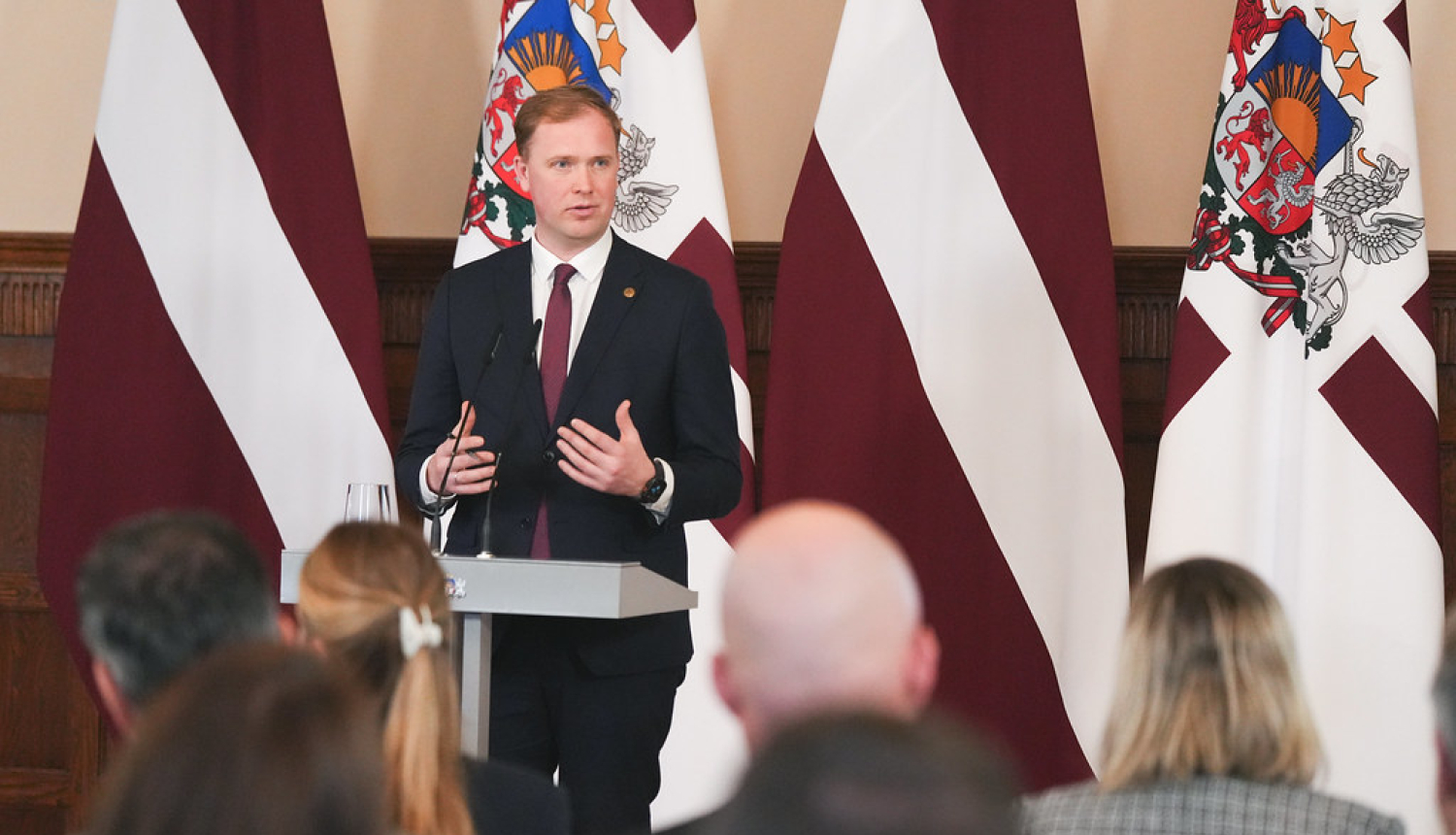
Minister of Economics, Viktors Valainis