


 Flickr
Translated using ChatGPT service.
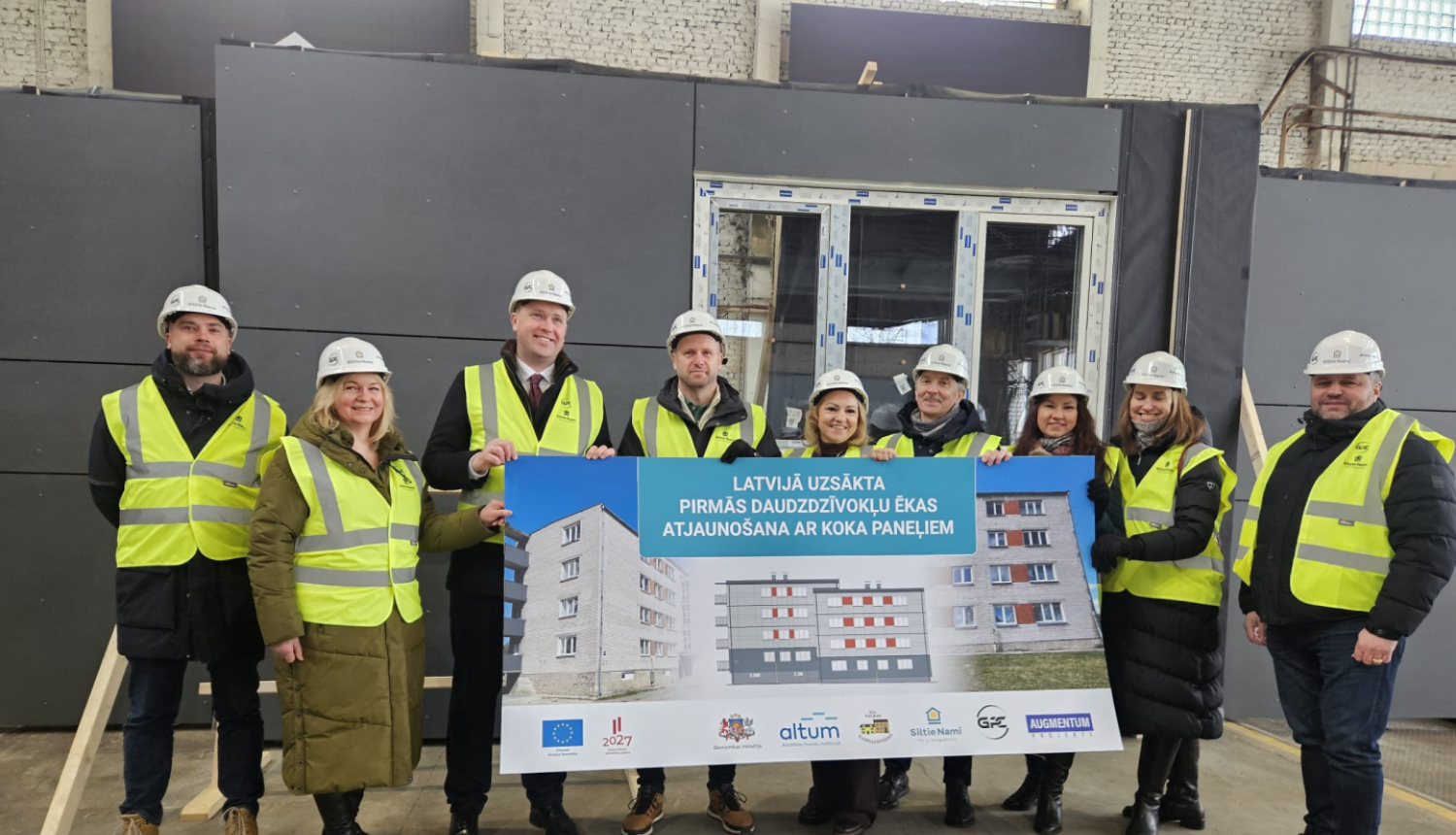
On 23 February this year, at the production facility of SIA “GPC” (part of the SIA “SILTIE NAMI” group) in Riga, Krustpils Street, Latvia’s first industrial production line for wood-frame panels for the renovation of multi-apartment building façades was presented.
The event was attended by Minister of Economics Viktors Valainis, Chairman of the Board of SIA “SILTIE NAMI” Kārlis Reinfelds, and Member of the Board of SIA “Valkas namsaimnieks” Ivo Meļķis, the implementer of the first pilot project.
Production of panels for pilot projects has already begun at the SIA “GPC” facility, and the first building where they will be installed is a multi-apartment building in Valka, at 12 Tirgus Street.
Currently, several pilot projects for insulating multi-apartment buildings using industrially produced wood panels have been launched in Latvia.
“Renovation of multi-apartment buildings in Latvia is becoming increasingly important, and alongside traditional façade insulation solutions, industrially produced wood-frame panels are gaining more attention. This is a modern approach to building renovation that combines energy efficiency, durability, and contemporary architecture,” emphasizes Minister of Economics Viktors Valainis.
Ieva Vērzemniece, Head of the Energy Efficiency Programmes Department at ALTUM:
“The energy efficiency improvement programme is in high demand, and activity among buildings is significant – already this year, construction will be completed in the first buildings within this support programme, including those using industrially produced wood-frame panels for renovation. We see that these buildings will serve as a good example for others to choose this type of renovation in the future.”
Meanwhile, Chairman of the Board of SIA “Siltie nami” Kārlis Reinfelds highlights the convenience of wood panels as an insulation solution:
“The main benefits are for residents, as wood-frame panels are installed without scaffolding, meaning windows are not covered and the building façade can be renovated within a few weeks. There are also long-term benefits – a renovated building with a modern and well-maintained façade increases the property’s market value. The less visible part of the process – manufacturing in the factory – ensures higher precision, consistent quality, and strict production control. Panel façades are more resistant to climate impact and mechanical damage, reducing the need for additional maintenance costs.”
“I am truly pleased that one of these projects is being implemented in Valka, the city where Latvia begins – the production of wood panel systems for the renovation of multi-apartment buildings. It shows that innovation is not only the privilege of large cities,” says Ivo Meļķis, Member of the Board of SIA “Valkas namsaimnieks”.
The use of wood panels allows buildings to be renovated up to twice as fast, as approximately 90% of the work is carried out in the factory, reducing the impact of weather conditions on the construction process and minimizing inconvenience for residents.
Within the support programme “Improving Energy Efficiency in Residential Buildings”, owners of multi-apartment buildings are eligible for substantial European Union funding to improve energy efficiency. As one of the programme’s priorities, support has been provided for pilot projects using an innovative method for façade insulation – industrially produced wood-frame panels – with additional state budget funding of EUR 1.5 million.
SIA “Siltie nami” is a Latvian company that has been providing design, construction, and energy service solutions since 2015. Over the years, the company has renovated 17 multi-apartment residential buildings within EU-funded support programmes. SIA “GPC” is a production facility established last year within the SIA “SILTIE NAMI” group, currently specializing in the development of industrially produced wood-frame panels.
The renovation of a multi-apartment residential building at 12 Tirgus Street in Valka is currently underway, with total eligible costs reaching EUR 0.96 million. The project includes the production and installation of industrially manufactured wood-frame panels. A significant portion of the project is covered by EU funding — a capital rebate of 65.57%. This means that more than two-thirds of the renovation costs are compensated for residents, while the remaining financing is provided through a loan.