


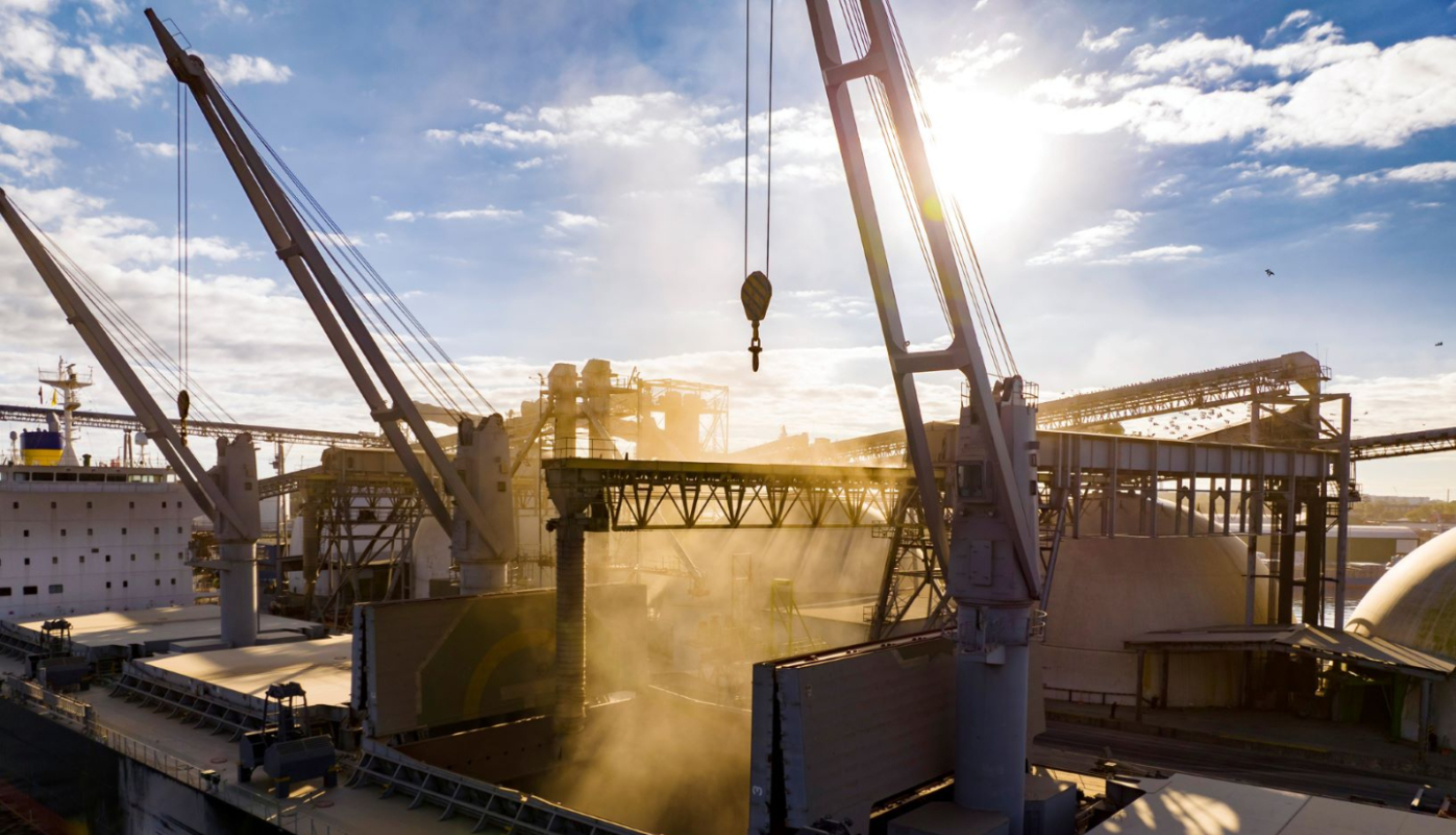
In the first nine months of 2025, 23.9 million tons of cargo were handled in the ports of Riga, Liepāja, and Ventspils. According to port data, a total of 12.3 million tons were handled at Riga port terminals, 6.5 million tons at Ventspils, and 5.1 million tons at Liepāja.
The ports of Riga, Liepāja, and Ventspils are a vital backbone of the Latvian economy, facilitating export and import flows while supporting regional development. The operations of these three largest ports constitute a significant part of Latvia’s GDP and strengthen the country’s competitiveness in the Baltic Sea region. The economic impact of the ports is not only local but also strategically important, particularly given the growing geopolitical significance.
“Latvian ports are the backbone of our economy—they not only ensure cargo movement and exports but also create stability in the regions and new opportunities for businesses. The results of Riga, Liepāja, and Ventspils ports—23.9 million tons of cargo—demonstrate that Latvia’s transit and logistics sector can adapt to market changes and become increasingly competitive. We see that ports are increasingly becoming not only cargo transport points but also modern logistics and industrial centers, generating added value for our economy,” emphasizes Minister of Economics Viktors Valainis.
In September, a total of 1.56 million tons of cargo were handled at Riga port terminals, 12% more than in August. One-third (0.52 million tons) consisted of various agricultural products, marking the highest monthly throughput ever for this cargo group at Riga port.
The largest volumes in September were domestic wheat. This year, an interesting trend has emerged in logistics chains—warehouse storage capacity at Riga port terminals allows them to serve as grain collection and consolidation points before further shipments. As a result, 37,000 tons of wheat products were delivered to Riga port from Sweden by several ships this year.
According to data compiled by the Riga Freeport Authority, a total of 12.3 million tons of cargo were handled at Riga port terminals in the first nine months, 6.6% less than last year. The largest volumes consisted of containerized cargo (3.65 million tons), agricultural products (2.03 million tons), and forestry products (3.88 million tons). Over nine months, the volume of handled petroleum products increased by 38.2%. In September, 37.1 thousand tons of liquefied gas were handled at Riga port, bringing the nine-month total to 170 thousand tons.
Positive trends in the port cargo portfolio were maintained for bulk mineral fertilizers (+8.7% compared to 2024) and construction materials (+46.8% compared to 2024). Riga port also set a record in cruise passenger handling this year. In the first nine months, 78 cruise ships carrying 101.9 thousand passengers were served, 28.2 thousand more than in the same period last year.
According to a study by the CERTUS think tank, each ton of cargo handled at Riga port contributes EUR 10.7 to Latvia’s GDP, totaling EUR 131 million over the first nine months of this year.
“Port companies actively and successfully adapt to the changing geopolitical situation by attracting new partners and clients and exploring new opportunities. Government support plays a very important role in this process—both through flexible and supportive legislation and a strategic vision for the sector’s development and its importance to the Latvian economy. It is particularly significant that government representatives actively participate in foreign visits alongside businesses, promoting the recognition of Latvian companies and making a substantial contribution to strengthening entrepreneurship abroad,” notes Elīna Štrodaha, board member of the Latvian Stevedoring Companies Association.
Ventspils port terminals handled a total of 6.5 million tons of cargo in the first nine months, 15% more than in the same period of 2024. Cargo volumes continue to grow across all three major segments—petroleum products, coal, and Ro-Ro (roll-on/roll-off) cargo. This year is notable as Ventspils port has become a unique logistics corridor even for 100-meter-long truck convoys.
Nearly half of all cargo (2.9 million tons) consisted of bulk liquids, with petroleum products increasing by 39%. The second-largest segment was Ro-Ro cargo at 1.2 million tons, up 22%. Active handling of coal from Kazakhstan also grew this year—1.1 million tons, an increase of 60.5% compared to last year.
Ventspils port terminals also handled various wood products (pellets, chips, lumber), agricultural products (biodiesel, palm and sunflower oils, grains, malt, rapeseed and bran pellets, peas, etc.), liquid chemicals, peat, and other cargo. Compared to last year, the handling of wood and agricultural products decreased, and manganese ore transshipment completely stopped due to sanctions.
Liepāja port handled a total of 635.8 thousand tons of cargo in September, 27.97% more than in September 2024. Of this, 472.4 thousand tons were exported and 163.4 thousand tons imported.
Bulk cargo dominated the monthly structure, totaling 459.3 thousand tons, mainly grain and grain products (329.6 thousand tons), construction materials (75.9 thousand tons), wood chips (20.6 thousand tons), and wood pellets (17.2 thousand tons). In the liquid bulk segment, 22.3 thousand tons of petroleum products were handled. General cargo in September reached 154.1 thousand tons, including 56.0 thousand tons of Ro-Ro without engines and 83.0 thousand tons of self-propelled units, while lumber volumes amounted to 10.4 thousand tons. In total, 99 ships were served at the port in September, with 8,232 passengers.
In the first nine months of this year, Liepāja port’s total cargo turnover amounted to 5.1 million tons, 2.7% less than the same period last year. Bulk cargo accounted for 66% of the total, or 3.36 million tons. Among the major cargo groups, grain and grain products reached 2.05 million tons, construction materials 0.6 million tons, and petroleum products 2.2 million tons. General cargo volume totaled 1.5 million tons, Ro-Ro units numbered 86,615, 871 ships were served, and passenger numbers reached 81,798.