


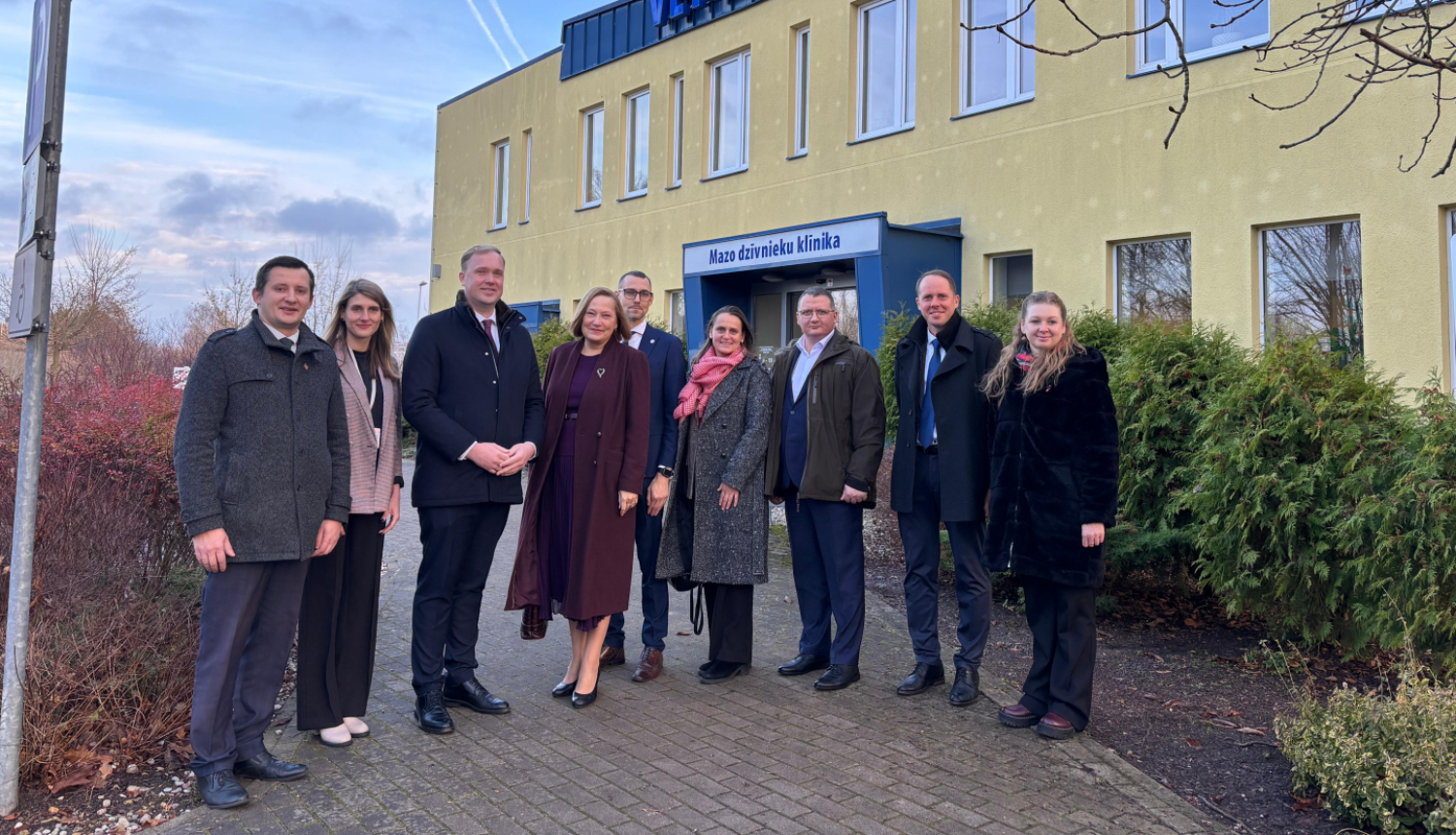
On November 20, Economy Minister Viktors Valainis visited the Latvia University of Life Sciences and Technologies (LBTU), where he familiarized himself with the university’s research projects and innovation achievements across various sectors of the economy. He also met with students and delivered a guest lecture titled “Latvia’s Economy 2026.”
The Minister emphasized:
"Latvia’s economic growth is based on science, technology, and the people who develop them. Researchers at LBTU demonstrate how research is transformed into practical solutions – from agricultural technologies and robotic platforms to alternative fuels and innovations in veterinary medicine. Strengthening the link between science and the economy is crucial, as this is the only way for Latvia to produce high value-added products, maintain and develop skilled specialists, and compete internationally."
LBTU Rector Irina Arhipova noted:
"We are pleased that the Minister had the opportunity to learn firsthand about LBTU’s achievements as a research university and its main research directions. Seeing the university’s innovations and technological solutions, which enhance competitiveness in agriculture, food, defense, and other sectors, we jointly explore ways to motivate Latvian youth to choose studies in life sciences and technology. Moreover, close collaboration between science and business promotes the implementation of innovative solutions and supports sustainable national economic development."
At the start of the visit, Minister Valainis toured the LBTU Veterinary Clinic, including the Small Animals Clinic and Equine Clinic, observing studies and research activities, and discussing the involvement of cooperation partners and future development plans. Representatives of the Faculty of Veterinary Medicine (VMF) highlighted the importance of accreditation by European veterinary education institutions, which strengthens veterinary medicine in Latvia and enhances international recognition, competitiveness in higher education, and attracts foreign students.
At the Institute of Landscape Architecture and Environmental Engineering, Valainis was briefed on the institute’s study programs, academic activities, and research areas. Key projects were also presented, such as the Latvia Digital Landscape Atlas, innovative public space solutions, “Out of the Box” initiatives, NATALIE (Horizon Europe), LIFE GOODWATER IP, and projects related to the implementation of river basin management plans and surface water quality. The Minister also viewed study infrastructure, a master’s student exhibition, and student model projects.
During his meeting with students, Minister Valainis delivered the guest lecture “Latvia’s Economy 2026.” He highlighted that one of the main instruments of state policy shaping both economic development and social security is the budget process. This year, particular attention in budget planning was given to Latvia’s long-term security and stability, the country’s top priority. He explained that ensuring security is not only about internal order and defense but also a significant signal to foreign investors. The second priority is healthcare, including promoting demographics. Healthcare and family support are essential conditions for maintaining a stable population and sustainable labor market development. He concluded by emphasizing the importance of education, which ensures workforce competitiveness, innovation, and business development. Investments in education are strategically important to create a stable, knowledge-based economy and increase Latvia’s international competitiveness.
Next, Valainis visited the LBTU Plant Protection Scientific Institute “Agrihorts,” where he learned about the institute’s international-level research and practical projects in plant protection. The Minister gained insight into digital irrigation processes that use artificial intelligence for efficient water management, as well as early visual detection of plant diseases and identification of pathogens using morphological and molecular methods.
At the end of the visit, the Minister was presented with research from the LBTU Alternative Fuels Scientific Laboratory, including the development of robotic platforms for studying biological weed control methods. These platforms, developed by LBTU researchers in agriculture, engineering, and IT, can autonomously move across fields, identify weeds and distinguish them from crops, and control weed growth using high-energy lasers or precisely positioned mechanical implements. The laboratory also demonstrated a commercial prototype of a tractor-mounted laser weeding unit called “WeedBot” and presented research results on the use of hydrogen in internal combustion engines.